Health and Safety Policy for Office Cleaners and Commercial Cleaning Staff
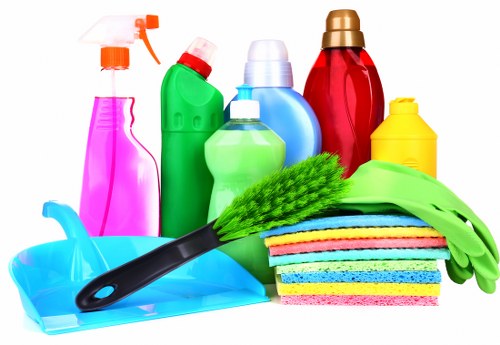 This Health and Safety Policy outlines responsibilities and safe working practices for office cleaners, cleaning office cleaners, and allied commercial cleaning teams. It sets out the purpose, scope and general approach to risk control to protect staff, building occupants and visitors. The policy applies to daily cleaning operations, specialist cleaning tasks and routine maintenance duties performed by professional cleaning staff and janitorial cleaners. Its aim is to promote a safe workplace culture where hazards are identified, controlled and communicated consistently.
All cleaning personnel must work to a clear set of procedures that prioritise hazard avoidance and continuous improvement. Training and competency are central: every member of the cleaning crew will receive induction, ongoing instruction and updates on safe methods, correct use of equipment and chemical handling. Managers will ensure that risk assessments are documented and reviewed regularly. The policy emphasises preventative measures and the importance of reporting hazards, near misses and incidents so that lessons are learned and controls strengthened.
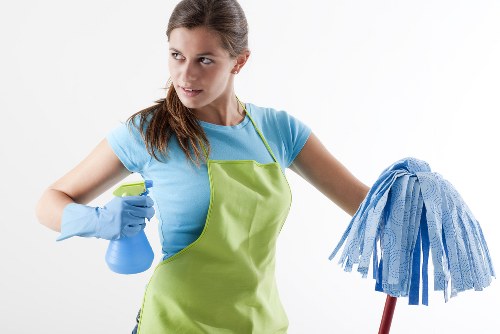 Scope and responsibilities: the policy covers general office cleaning, deep-clean routines, waste handling, floor care, restroom sanitation and occasional specialist tasks such as high-level cleaning. Key responsibilities include:
- Supervisors: ensure safe systems of work, allocate resources and monitor compliance.
- Cleaning staff: follow procedures, wear required PPE and report hazards without delay.
- Management: maintain equipment, provide training and review safety performance.
The
Risk Assessment and Control Measures
process is central to protecting cleaning teams. Every task should start with a brief assessment to identify slip and trip risks, manual handling challenges, chemical exposures, electrical hazards and working at height concerns. Control measures include eliminating unnecessary risks, reducing exposure where elimination is not possible, and providing appropriate protective equipment. Examples: using wet floor signage, mechanical aids for lifting, sealed containers for hazardous substances and guard rails or harnesses for elevated work.Personal protective equipment is a last line of defence but essential for many cleaning tasks. Provided items may include gloves, eye protection, non-slip footwear and respiratory protection where dust or fumes are present. PPE must be well maintained and replaced when worn. Training covers correct selection, fitting and storage of PPE, and supervisors will check compliance during routine inspections. Emphasis is placed on personal responsibility and team accountability.
![A young woman with light skin and auburn hair tied back, wearing bright yellow rubber cleaning gloves and a striped apron, is smiling gently while holding a spray bottle in her right hand and a scrub brush in her left. The background is a plain, vibrant green, which is often used in promotional images for cleaning services. Her posture suggests she is ready to clean, and her facial expression appears confident and friendly. The image reflects a professional cleaning attitude, suitable for a residential or commercial cleaning service website, such as cleaningofficecleaners.com, and subtly supports local SEO for the area around [POSTCODE] in [TOWN]. The focus is solely on the woman’s upper body, with clear details of her gloves, cleaning tools, and expression, emphasizing readiness and professionalism for cleaning tasks.](/pub/_photos/cleaning/f1653705784.jpg)
Safe Use of Chemicals and Equipment
Safe handling of cleaning agents minimizes health risks. Cleaning staff must follow manufacturer instructions and any site-specific precautions. Where possible, less hazardous products and dilution systems are preferred. Containers must be labelled and stored securely. Equipment such as powered floor cleaners, vacuums and ladders require regular maintenance records and pre-use checks. Electrical leads should be inspected, with any defects reported immediately. Training ensures staff understand how to avoid contact with eyes and skin and what to do in case of accidental exposure.Manual handling is a frequent cause of injury among cleaning personnel. Tasks should be reviewed to reduce manual lifting, for example by using trolleys or team lifts for bulky items. Training in safe lifting techniques and ergonomic practices is provided and reinforced through practical demonstrations. Supervisors must allocate tasks considering individual capability and health conditions, and adjustments made when necessary to support long-term wellbeing and prevent musculoskeletal disorders.
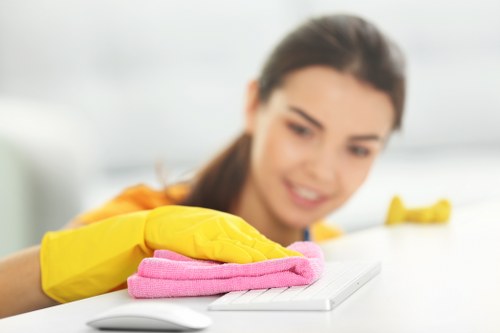 Lone working and working in occupied spaces require clear procedures to protect lone cleaners and building users. Staff working alone should have a means of communication and a check-in system. Cleaning activities carried out during business hours should minimise disruption and maintain safe access routes for building occupants. Where security or client-specific rules exist, cleaners will receive instruction on secure access, visitor awareness and escalation procedures.
![In a modern kitchen area with light-colored tiled walls, a person wearing a white long-sleeved shirt and a bright yellow rubber glove is giving a thumbs-up gesture. On the clean, smooth white countertop, there is a blue spray bottle filled with cleaning liquid and a crumpled blue cleaning cloth nearby, indicating recent or ongoing cleaning activity. The scene suggests a professional approach to maintaining hygiene in a residential or commercial space, consistent with services provided by Cleaning Office Cleaners in the [POSTCODE] area near [TOWN]. The background includes a stainless steel faucet and sink, both appearing spotless and well-maintained, reflecting a high standard of cleanliness. The overall atmosphere indicates attention to detail and thorough cleaning in a kitchen environment, aligning with industry standards for health and safety policies.](/pub/_photos/cleaning/f1435009232.jpg) Emergency arrangements form a vital part of the policy: staff must know evacuation routes, muster points and basic first aid responses. Incidents are recorded and investigated to prevent recurrence. The policy supports a culture where near misses and safety concerns are reported without blame, enabling continuous improvement. Regular safety audits and performance reviews will check that policies are followed and that practical improvements are implemented.
Emergency arrangements form a vital part of the policy: staff must know evacuation routes, muster points and basic first aid responses. Incidents are recorded and investigated to prevent recurrence. The policy supports a culture where near misses and safety concerns are reported without blame, enabling continuous improvement. Regular safety audits and performance reviews will check that policies are followed and that practical improvements are implemented.
Monitoring and review keep the policy effective. Regular inspections, incident trend analysis and feedback from cleaning teams help identify emerging risks and training needs. Management will review the policy at planned intervals and revise it in response to significant changes in work practices, new equipment or updated industry guidance. The objective is an adaptable, proactive approach to workplace safety that keeps cleaning staff safe and productive.
The policy promotes a positive safety culture where everyone from supervisors to new joiners contributes to a safe working environment. Clear communication, practical training and sensible controls are the pillars of this approach. Staff are encouraged to take an active role in identifying safer methods of work and suggesting improvements that make daily routines less hazardous and more efficient.
In summary, this Health and Safety Policy provides a practical framework for protecting cleaning office teams and professional cleaners. It focuses on risk assessment, training, safe use of chemicals and equipment, manual handling, lone working, emergency preparedness and continuous review. By following these principles, commercial cleaning teams can carry out their duties safely, reliably and with respect for the wellbeing of everyone who uses the premises.